Understanding ED
Erectile Dysfunction — What's Actually Happening
Erectile dysfunction — the inability to achieve or maintain an erection firm enough for satisfactory sexual activity — affects approximately 40% of men at age 40, rising to 70% by age 70 (Massachusetts Male Aging Study, Feldman HA et al., J Urol 1994). An estimated 4.3 million men in the UK are affected — yet the vast majority are still being managed with medication that treats the symptom while the underlying problem quietly worsens.
In most cases, ED is a vascular condition. The erection mechanism depends on healthy endothelial function — the ability of blood vessel walls to relax and allow increased blood flow into the corpus cavernosum. In vasculogenic ED, this endothelial function is progressively impaired by the same disease processes that drive cardiovascular disease: atherosclerosis, microvascular damage, and endothelial dysfunction. ED often predates cardiac events by 3–5 years, representing the earliest clinical manifestation of systemic endothelial deterioration.
PDE5 inhibitors (sildenafil, tadalafil, vardenafil) amplify the body's existing response to sexual stimulation by blocking cyclic GMP breakdown. They do not repair the deteriorating vascular architecture that produces the dysfunction. As disease progresses, the signal they amplify gets weaker — which is why Viagra stops working over time. Higher doses compensate temporarily; the underlying architecture continues to deteriorate. Non-response rates of 30–40% in the general ED population, rising to over 60% in men with diabetes or post-prostatectomy ED, reflect the extent to which vascular pathology can outpace pharmacological compensation.
Source: Massachusetts Male Aging Study, Feldman HA et al., J Urol 1994. Dr Kishore Bahl — Shockwave Therapy in Clinical Practice, 2026. Chapters 6 & 7.
Pills amplify a signal that is getting weaker. Shockwave therapy rebuilds the transmitter.— Dr Kishore Bahl, Shockwave Therapy in Clinical Practice, 2026
How It Works
How Low-Intensity Shockwave Therapy Treats Erectile Dysfunction
1 · Precise anatomical targeting
Low-intensity shockwave energy is delivered precisely to the corpus cavernosum — the erectile tissue — using a comprehensive protocol covering the dorsal shaft, ventral shaft, and perineum to target the crural roots. Including crural root application produces more complete angiogenic stimulation of the entire erectile complex. Dr Bahl's 15-year urological specialisation means every focal applicator placement is anatomically precise.
2 · Vascular repair and neovascularisation
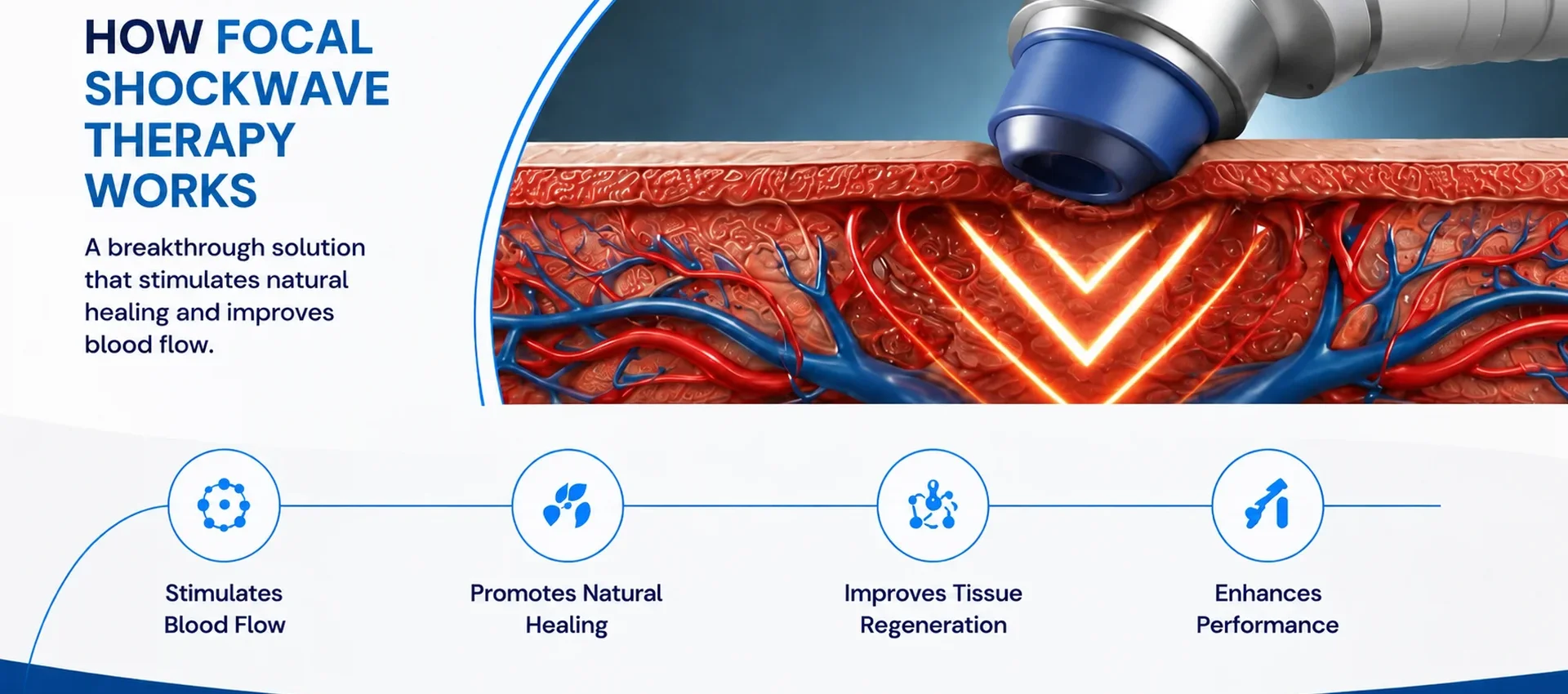
Acoustic energy stimulates mechanosensitive receptors in the corpus cavernosum, triggering neovascularisation (new blood vessel formation via VEGF), endothelial restoration (stimulating eNOS — the pathway diabetes disrupts and PDE5 inhibitors depend on), stem cell activation, nerve regeneration support, and smooth muscle repair. Each cascade addresses exactly what vasculogenic and diabetic ED requires.
3 · Restored spontaneous function
As neovascularisation progresses and endothelial function is restored, spontaneous erections return over weeks and months — a key outcome PDE5 inhibitors cannot produce. The 2021 meta-analysis (Zou ZJ et al., J Sex Med) found 50% of men required no medication at 6 months. 55% of PDE5 non-responders became responsive after shockwave, as the underlying vascular architecture was sufficiently repaired.
Who It's For
Who Can Shockwave Therapy Help?
Focal shockwave therapy is effective across three distinct patient populations, each with a specific biological rationale. Dr Bahl will assess which applies to you at your initial consultation.
Three Patient Populations
- Vasculogenic ED (primary indication) — Men with ED caused by endothelial dysfunction, arteriosclerosis or microvascular damage. The most common aetiology. Standard protocol: 6 sessions, 2×/week for 3 weeks (Vardi Y et al., Eur Urol 2012). Response rate: 60–75%. EAU Guidelines 2024 endorsed.
- Diabetic ED — Men with diabetes are three times more likely to develop ED, with onset 10–15 years earlier. Chronic hyperglycaemia damages endothelial cells and autonomic nerves required for erection. PDE5 inhibitors are less effective as the nitric oxide signalling pathway they depend on is impaired. Shockwave targets the biological machinery that generates the signal. Extended protocol: 9–12 weekly sessions. (Dr Bahl, Chapter 7)
- Post-Prostatectomy ED — Cavernous nerve damage from surgery leads to tissue hypoxia and, if untreated, fibrotic transformation. The window for rehabilitation is finite. Shockwave therapy offers a biologically active intervention — reducing the fibrotic cascade, supporting nerve recovery, and stimulating neovascularisation. Early intervention is critical. Dr Bahl's 15-year urological specialisation means the protocol is tailored precisely to your post-surgical situation. (Dr Bahl, Chapter 7)
Protocol selection is based on aetiology, disease severity, comorbidities and prior treatment history. Dr Bahl advises at your urological assessment.
What to Expect
-
1Consultation — Assessment with Dr Kishore Bahl to confirm suitability
-
2Treatment course — 6 sessions over 3 weeks (approx. 20 min each)
-
3No downtime — Resume normal activity immediately after each session
-
4Early results — Improvements typically begin at 3–4 weeks
-
5Full effect — Achieved by 12 weeks post-treatment
-
6Duration — Results last 1–2 years; booster sessions available
Clinical Evidence
What the Evidence Actually Shows
Sourced from Dr Kishore Bahl — Shockwave Therapy in Clinical Practice, 2026. Chapters 6 and 8.
2021 Systematic Review & Meta-Analysis
14 RCTsZou ZJ et al., J Sex Med 2021. 833 patients. Statistically significant improvements in IIEF-5 scores (mean improvement +4.2 vs sham). Approximately 60–75% of patients reporting meaningful clinical improvement.
Zou ZJ et al., J Sex Med 2021;18(2):397–407
2025 Meta-Analysis — Confirmed
12 RCTs882 men. Confirmed statistically significant improvements in erectile function and a higher proportion achieving erection hardness sufficient for intercourse compared to sham control.
12 RCT meta-analysis, 2025
EAU Guidelines 2024 — Endorsed
GuidelineSalonia A et al., EAU Guidelines on Sexual and Reproductive Health 2024 acknowledge low-intensity shockwave therapy as an evidence-based treatment option for vasculogenic erectile dysfunction — the most common type.
Salonia A et al., EAU Guidelines 2024
8× More Effective Than Sham
8×Landmark controlled study establishing the biological mechanism of action. More effective than sham at improving erection hardness at 6 months — the study that defined the standard 6-session Vardi protocol.
Vardi Y et al., Eur Urol 2012
50% No Longer Need Medication
50%50% of men no longer needed any PDE5 inhibitor medication at 6 months following a completed shockwave therapy course — reflecting genuine vascular repair rather than symptom management.
Zou ZJ et al., J Sex Med 2021
55% of PDE5 Non-Responders Restored
55%55% of PDE5 inhibitor non-responders — men for whom Viagra and Cialis had stopped working — became responsive to medication after shockwave, as underlying vascular architecture was sufficiently repaired.
Dr Bahl, Chapter 8
Results Last 12–24 Months
12–24 moBenefits persist after treatment ends — unlike PDE5 inhibitors which require every-encounter use. Duration reflects genuine vascular repair, not symptom management. Booster sessions available at 12–18 months.
Dr Bahl, Chapter 6
Why It Works
Shockwave Therapy vs Oral Medication — The Key Differences
Both have a role. Understanding the distinction helps you make the right choice for your situation.
| Comparison Point | PDE5 Inhibitors (Viagra, Cialis) | Low-Intensity Shockwave Therapy |
|---|---|---|
| Mode of action | Symptom management — amplifies existing vascular response | Disease modification — targets vascular pathology directly |
| Addresses root cause | No | Yes — stimulates neovascularisation and eNOS |
| Works when endothelium is damaged | Reduced — requires functional eNOS | Yes — stimulates eNOS and VEGF directly |
| Requires ongoing use | Yes — per dose, every encounter | No — results persist after treatment course |
| Duration of effect | 4–36 hours per dose | 12–24 months post-treatment course |
| Spontaneous erections | Only when medication active | Yes — restored naturally over weeks/months |
| Progressive disease | Efficacy declines as vascular disease progresses | Targets the vascular disease itself |
| Can they be combined? | Yes — synergistic in partial responders | Yes — EAU guidelines acknowledge combination |
Source: Dr Kishore Bahl — Shockwave Therapy in Clinical Practice, 2026. Chapter 8, Table 9.
The Protocol
Treatment Protocols at Shockwave Revibe
Protocol selection is based on clinical assessment — aetiology, disease severity, prior treatment history and patient goals. Dr Bahl selects the appropriate protocol at your initial consultation.
| Protocol | EFD (mJ/mm²) | Pulses/Session | Hz | Sessions | Interval | Primary Reference |
|---|---|---|---|---|---|---|
| Standard (Vardi) | 0.09 | 1,500 | 4 | 6 | 2×/week, 3 weeks | Vardi Y et al., Eur Urol 2012 |
| Extended Protocol | 0.09–0.15 | 1,500–3,000 | 4 | 12 | Weekly | Liu J et al., J Sex Med 2021 |
| Diabetic / Severe | 0.15–0.25 | 3,000 | 4 | 9–12 | Weekly | Sokolakis et al., J Sex Med 2019 |
Source: Dr Kishore Bahl — Shockwave Therapy in Clinical Practice, 2026. Chapter 6, Table 5.
What we treat
ED Treatment Services
We offer a range of evidence-based, non-invasive treatments for erectile dysfunction and sexual health.
Restores Sexual Performance
Our targeted ED treatments naturally restore sexual performance and boost confidence without medication. By addressing root causes through advanced, non-invasive therapy, we improve blood flow and sensitivity for lasting results.
Improves Natural Erections
Focal shockwave therapy stimulates the growth of new blood vessels and improves circulation, addressing the underlying causes of ED for a drug-free, long-term solution.
No Medications Required
Experience a natural, drug-free path to healing without the need for Viagra, Cialis, or invasive injections. Our treatments stimulate your body's own healing processes for safe, effective, long-term relief.

Focal shockwave therapy is one of the most significant advances in non-surgical erectile dysfunction treatment. We consistently see men regain confidence and quality of life — without a single medication or invasive procedure.
Got questions?
Frequently Asked Questions
Related Treatments
Peyronie's Disease Treatment
Focal shockwave for Peyronie's plaques and penile curvature. 75/25 plaque-to-corpus protocol. 90% pain relief.
PRP Shot London
Platelet-rich plasma therapy — standalone or combined with shockwave for enhanced vascular repair.
Musculoskeletal Pain Therapy
Focal shockwave for chronic tendon pain, calcific shoulder and soft tissue injuries.
From Our Blog
Evidence-based articles on ED treatment and men's health from our clinical team.
Men's Health • June 2026
Does Shockwave Therapy Work for Erectile Dysfunction? The Evidence Reviewed
14 RCTs, 833 patients, EAU guideline endorsement. We review the clinical evidence for low-intensity shockwave therapy in erectile dysfunction — honestly, completely, with primary references.
Read article →Men's Health • May 2026
Why Viagra Stops Working — And What Shockwave Therapy Does Instead
PDE5 inhibitors amplify a signal that gets weaker over time. Shockwave therapy rebuilds the transmitter. Here's the vascular biology behind both approaches.
Read article →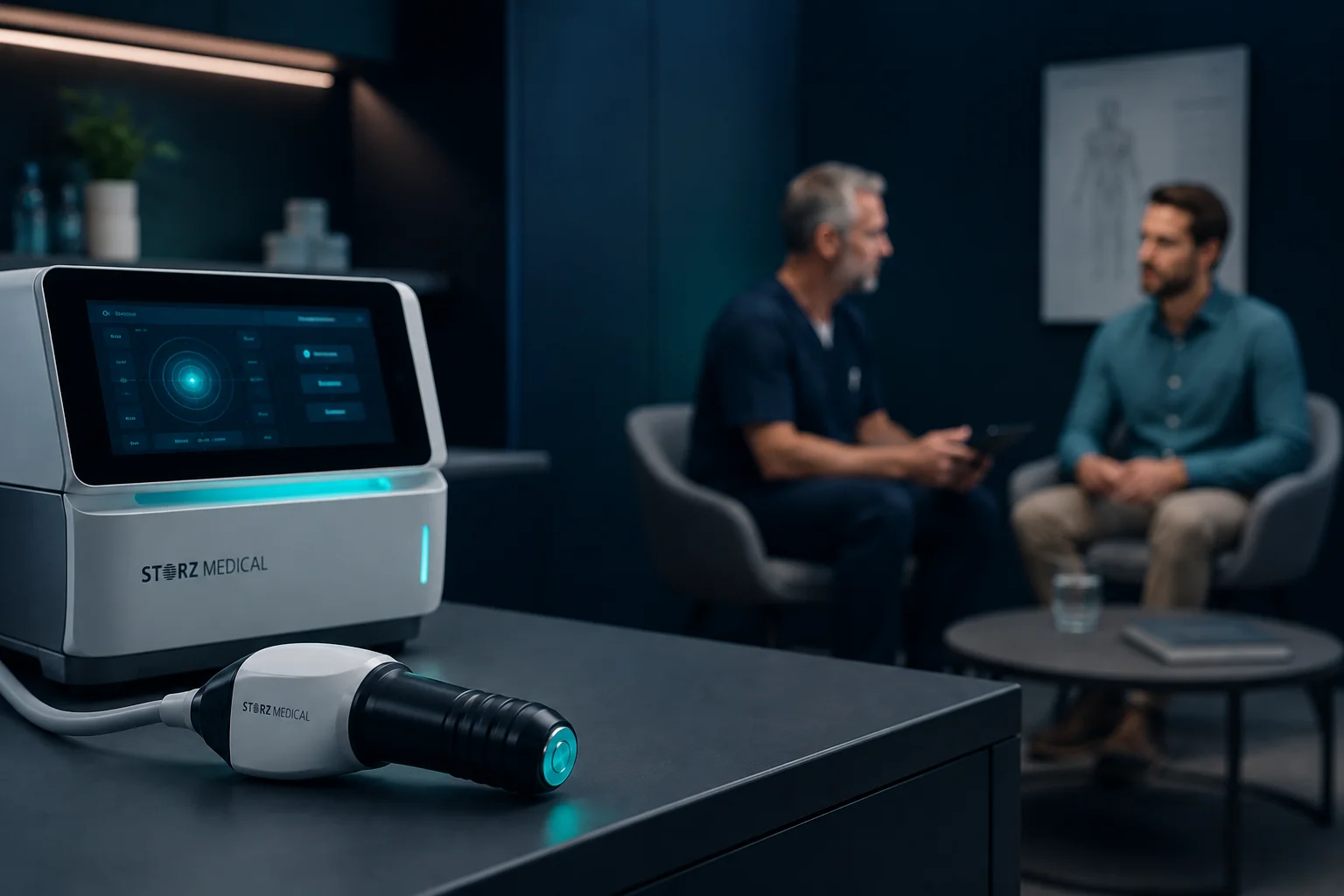
ED Treatment • May 2026
Erectile Dysfunction in Diabetes: Why Pills Fail & How Focal Shockwave Helps
Diabetes is the leading cause of treatment-resistant ED. Here's why shockwave therapy succeeds where oral medications fall short.
Read article →
ED Treatment • May 2026
Shockwave Therapy After Radical Prostatectomy — Penile Rehabilitation
Restore erectile function after radical prostatectomy with Li-ESWT. Evidence-based penile rehabilitation.
Read article →Take the First Step — In Complete Confidence
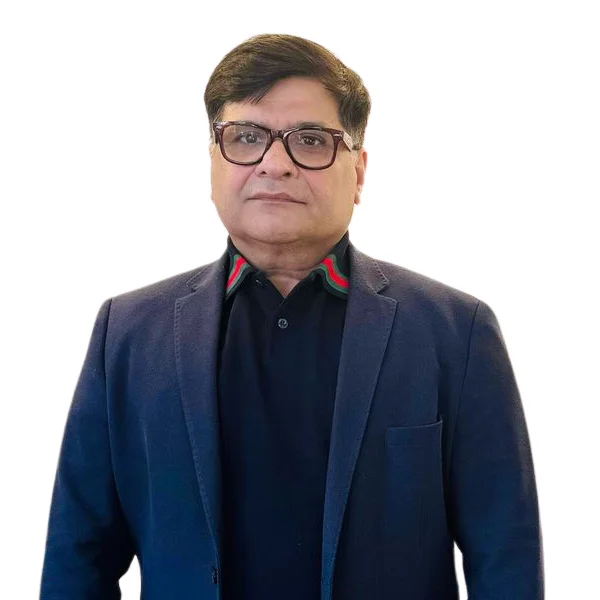
If you are experiencing erectile dysfunction — whether newly onset, worsening over time, related to diabetes, or following prostate surgery — focal shockwave therapy at Shockwave Revibe Clinic may offer what medication cannot: treatment of the underlying vascular pathology, not management of the symptom. Every consultation is conducted personally by Dr Kishore Bahl, in complete confidence, at our Notting Hill Gate clinic. Appointments available at 22 Notting Hill Gate, London W11.
Book a ConsultationBy booking an appointment you agree to our Privacy Policy
Find Us on Google
Share your experience — your review helps others find our clinic.