The Science
Why Chronic Musculoskeletal Pain Doesn't Heal — And What Changes That
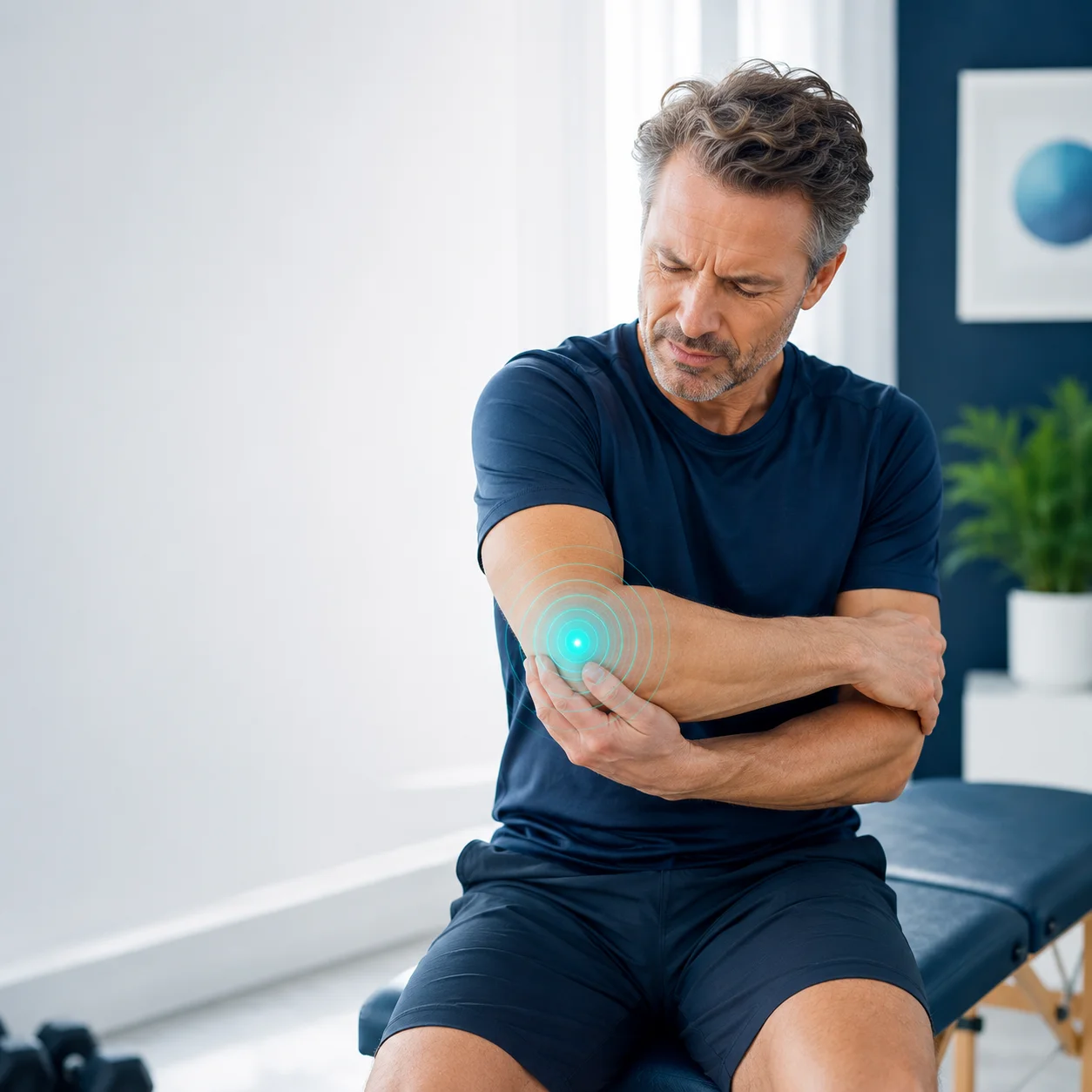
Most people assume chronic tendon pain is caused by inflammation — which is why anti-inflammatory treatments like NSAIDs and corticosteroid injections are so commonly prescribed. But biopsy studies of painful tendons consistently reveal a very different picture: a degenerative process called tendinosis, characterised by disorganised collagen, increased ground substance, abnormal vasculature and nerve ingrowth — without significant inflammatory cellular infiltrate. (Khan KM et al., Lancet 2002; Magnusson SP et al., Nat Rev 2010)
This distinction matters fundamentally for treatment. Anti-inflammatory treatments address a mechanism that is largely absent in chronic tendon pain. The primary driver is degeneration, not inflammation — and the tissue requires a biological repair stimulus, not symptom suppression. This is why NSAIDs provide only short-term relief. This is why corticosteroid injections weaken tendon tissue with repeated use (Coombes 2010, LANCET). And this is why physiotherapy alone — while valuable — is slow, requires sustained compliance, and is best combined with a more powerful biological stimulus.
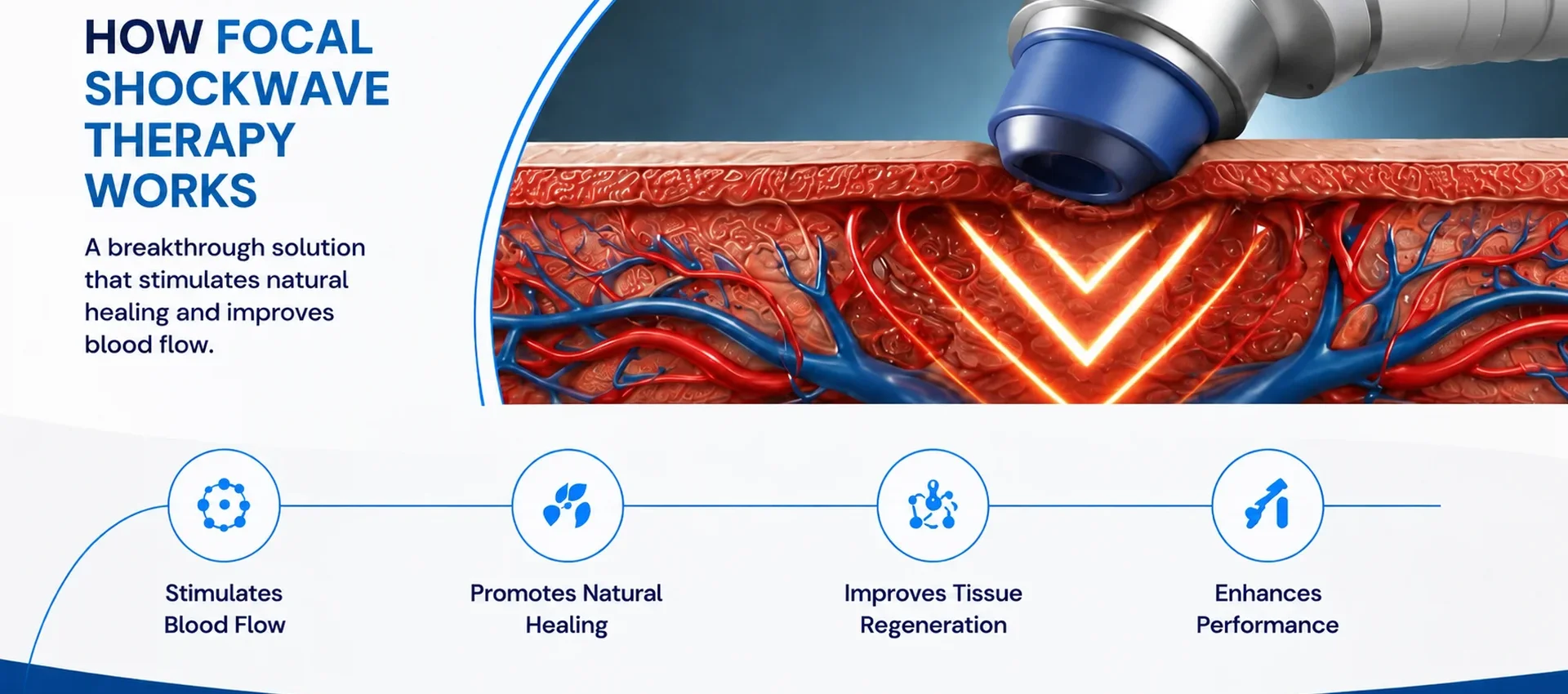
Focal shockwave therapy delivers precisely calibrated acoustic energy pulses into the damaged tendon tissue, mechanically stimulating tenocytes (tendon cells) that had gone dormant in the degenerated tissue and triggering production of new collagen. Neovascularisation follows — damaged tendons have poor blood supply; shockwave stimulates new blood vessels, restoring the nutrient and oxygen supply the tendon needs to regenerate. Pain signalling is reduced through Substance P desensitisation. Over 6–12 weeks, the tendon lays down new, well-organised collagen fibres — genuine structural repair, not symptom masking.
The shift from tendinitis to tendinosis has direct treatment implications. Shockwave provides the biological repair stimulus that degenerative connective tissue cannot generate independently — and most patients feel meaningful pain relief after just the first session.— Dr Kishore Bahl, Shockwave Therapy in Clinical Practice, 2026
How It Works
How Focal Shockwave Therapy Treats Chronic Musculoskeletal Pain
1 · Precise depth delivery
Focal shockwave delivers energy precisely to the degenerative tissue — at depths of up to 12cm, reaching structures that radial devices cannot access. For calcific shoulder tendinitis, the focal point is positioned within the calcific deposit. For plantar fasciitis, energy targets the calcaneal insertion. For tennis elbow, the ECRB origin at the lateral epicondyle. Targeting accuracy determines whether the biological repair stimulus reaches the pathological tissue.
2 · Biological repair restart
Acoustic energy mechanically stimulates tenocytes that have gone dormant in degenerated tissue — triggering a cascade of collagen synthesis, neovascularisation and Substance P reduction. For calcific conditions, higher-energy focal shockwave mechanically disrupts the calcium hydroxyapatite crystal lattice in addition to stimulating biological repair. Unlike corticosteroid injection — which weakens tendon tissue with repeated use — shockwave therapy produces genuine structural repair.
3 · Progressive structural remodelling
New collagen formation and neovascularisation continue over 6–12 weeks following the last session, as the repaired tissue remodels into normal tendon architecture. Unlike steroid injection — whose benefits peak at 4–6 weeks and diminish — shockwave therapy improvements continue to develop over the treatment period and are maintained at 12-month and 24-month follow-up. This durability reflects genuine tissue repair, not symptomatic suppression. (Dr Bahl, Chapter 16)
Find Out If It's For You
Is Shockwave Therapy Right for Your Condition?
Focal shockwave therapy is suitable for patients with chronic musculoskeletal pain that has not responded adequately to rest, physiotherapy, NSAIDs or corticosteroid injection. Dr Bahl will assess your suitability at an initial consultation — reviewing your clinical history, imaging, and prior treatments before recommending a protocol.
Suitable Conditions
- Calcific shoulder tendinitis (any stage)
- Plantar fasciitis (chronic >3 months)
- Tennis elbow (lateral epicondylitis)
- Greater trochanteric pain syndrome (hip pain)
- Lower back pain (myofascial/enthesopathy)
- Patellar tendinopathy (Jumper's knee)
- Achilles tendinopathy
- Hamstring tendinopathy
- Patients who have had corticosteroid injections with insufficient or short-lived benefit
- Those seeking a non-surgical, drug-free alternative
What to Expect
-
1Consultation — Clinical assessment by Dr Bahl, imaging review, diagnosis confirmation, protocol selection.
-
2Treatment course — 3 to 5 sessions (20 min each) at weekly intervals for most MSK conditions.
-
3No downtime — Resume normal daily activities immediately after each session.
-
4Early results — Most patients feel meaningful pain relief after the first session.
-
5Progressive improvement — Continued improvement over 6–12 weeks as tissue remodels.
-
6Durability — Results maintained at 12 and 24 months. Superior to corticosteroid injection long-term.
Clinical Evidence
Conditions We Treat — With the Evidence
Response rates and protocol data sourced from Dr Kishore Bahl — Shockwave Therapy in Clinical Practice, 2026. Chapters 13, 14 and 16.
Calcific Shoulder Tendinitis
Louwerens 2014 multi-centre RCT (n=152) — complete or partial calcium resorption in 86% of high-energy group at 12 months vs 48% low-energy. Energy level is a critical determinant. Response vs steroid: Superior at 12 months.
Protocol: 0.28–0.60 mJ/mm², 2,000–4,000 pulses, 3–5 sessions weekly. Imaging guidance recommended.
Plantar Fasciitis (chronic)
Gollwitzer 2015 RCT (n=246, JBJS Am) — superiority over sham at 12 weeks, maintained at 12 months. Goal is biological stimulation of fascial remodelling and neovascularisation at calcaneal insertion. Response vs steroid: Superior at 12 months.
Protocol: 0.12–0.30 mJ/mm², 2,000–3,000 pulses, 3–5 sessions weekly.
Tennis Elbow (Lateral Epicondylitis)
Spacca 2005 RCT + Buchbinder Cochrane review — meaningful improvement in pain and function at 6 and 12 months. Superiority over corticosteroid injection at 12-month follow-up. Response vs steroid: Superior at 12 months.
Protocol: 0.12–0.25 mJ/mm², 2,000–3,000 pulses, 3–5 sessions weekly.
Frozen Shoulder (Adhesive Capsulitis)
Vahdatpour 2014 — comparable to steroid at 12 months. Clinical series show near-full overhead elevation following focal shockwave — a recovery that typically requires months with rehabilitation alone. Response vs steroid: Comparable at 12 months.
Protocol: 0.15–0.25 mJ/mm², 2,000–3,000 pulses, 4–6 sessions weekly.
Greater Trochanteric Pain (Hip)
Rompe 2009; Mani-Babu S et al. Am J Sports Med 2015 — superior to corticosteroid injection at 12-month follow-up. Gluteal tendon insertion lies at 4–8cm depth, beyond reach of radial devices. Response vs steroid: Superior at 12 months.
Protocol: 0.12–0.25 mJ/mm², 2,000–3,000 pulses, 3–6 sessions weekly.
Lower Back Pain (Myofascial)
Ji HM et al. Ann Rehabil Med 2012. Myofascial enthesopathy responds through inflammation modulation and Substance P reduction at trigger points and enthesis. Most effective for enthesopathy component rather than discogenic or nerve root pain.
Protocol: 0.10–0.25 mJ/mm², 2,000–3,000 pulses, 4–6 sessions weekly.
Patellar Tendinopathy
Neovascularisation and collagen remodelling at patellar tendon insertion. Combined with progressive loading rehabilitation for optimal outcomes.
Protocol: 3–5 sessions weekly.
Achilles Tendinopathy
Rompe 2007 RCT (JBJS Am 89:1978–1985) — superior to eccentric loading alone at 4 months.
Protocol: 0.10–0.25 mJ/mm², 2,500–3,500 pulses, 3–6 sessions weekly.
Source: Dr Kishore Bahl — Shockwave Therapy in Clinical Practice, 2026. Chapters 13, 14, 16.
Why It Works
Why Shockwave Therapy — Not Injections or Surgery
A direct, evidence-based comparison for patients who have tried other options.
| Treatment | Addresses Tendinosis? | 12-Month Outcome | Evidence |
|---|---|---|---|
| Rest / activity modification | No | Recurrence common | Appropriate adjunct; insufficient as sole management for chronic cases |
| NSAIDs | No — wrong mechanism | No long-term benefit | Multiple Cochrane reviews show no benefit over placebo at 6–12 months for chronic lateral epicondylitis |
| Corticosteroid injection | No — may worsen tendinosis | Inferior to shockwave at 12m | Well-evidenced short-term benefit; weakens tendon tissue with repeated use. Coombes 2010, LANCET. |
| Physiotherapy / eccentric loading | Yes — promotes collagen remodelling | Good with compliance | Effective but slow; best combined with shockwave for faster and more complete repair |
| Focal shockwave therapy | Yes — primary mechanism | 70–80% success in RCTs | Most consistent long-term evidence. Strengthens rather than weakens tendon tissue. Non-invasive. No downtime. |
What we offer
MSK Therapy Services
Clinically proven treatments for a wide range of musculoskeletal conditions.
Musculoskeletal Pain Therapy
Effective treatment for tendonitis, joint pain, plantar fasciitis, muscle strains and more. Targeted, non-invasive approach reduces pain, restores mobility, and supports long-term healing.
Sports Injury Recovery
Specialist shockwave therapy for muscle strains, tendon injuries and ligament damage. Supports faster healing, reduces pain and improves mobility for active individuals and athletes.
Chronic Pain Relief
Advanced therapy for long-term pain from overuse, repetitive strain or lingering injuries. Targets the source of discomfort and stimulates the body's natural healing response.

Shockwave therapy delivers something no medication or injection can match: it directly stimulates the biological process of tissue repair at the tendon or joint level. For patients with chronic conditions that have failed conventional treatment, this is the most evidence-based non-surgical option available.
Got questions?
Frequently Asked Questions
Related Treatments
Sports Injury Treatment
Focal shockwave for Achilles tendinopathy, stress fractures and athletic injuries.
Learn more →Frozen Shoulder Treatment
Doctor-led focal shockwave for adhesive capsulitis — restoring range of motion without surgery.
Learn more →Chiropractic Service
GCC-registered chiropractic care for structural alignment and pain relief — complementary to shockwave.
Learn more →From Our Blog
Evidence-based articles on musculoskeletal pain and shockwave therapy from our clinical team.
Musculoskeletal Pain • June 2026
Tendinitis or Tendinosis — Why the Distinction Changes Everything About Treatment
Most chronic tendon pain is not inflammation. It's degeneration. Understanding the difference explains why anti-inflammatories fail — and why shockwave works.
Read article →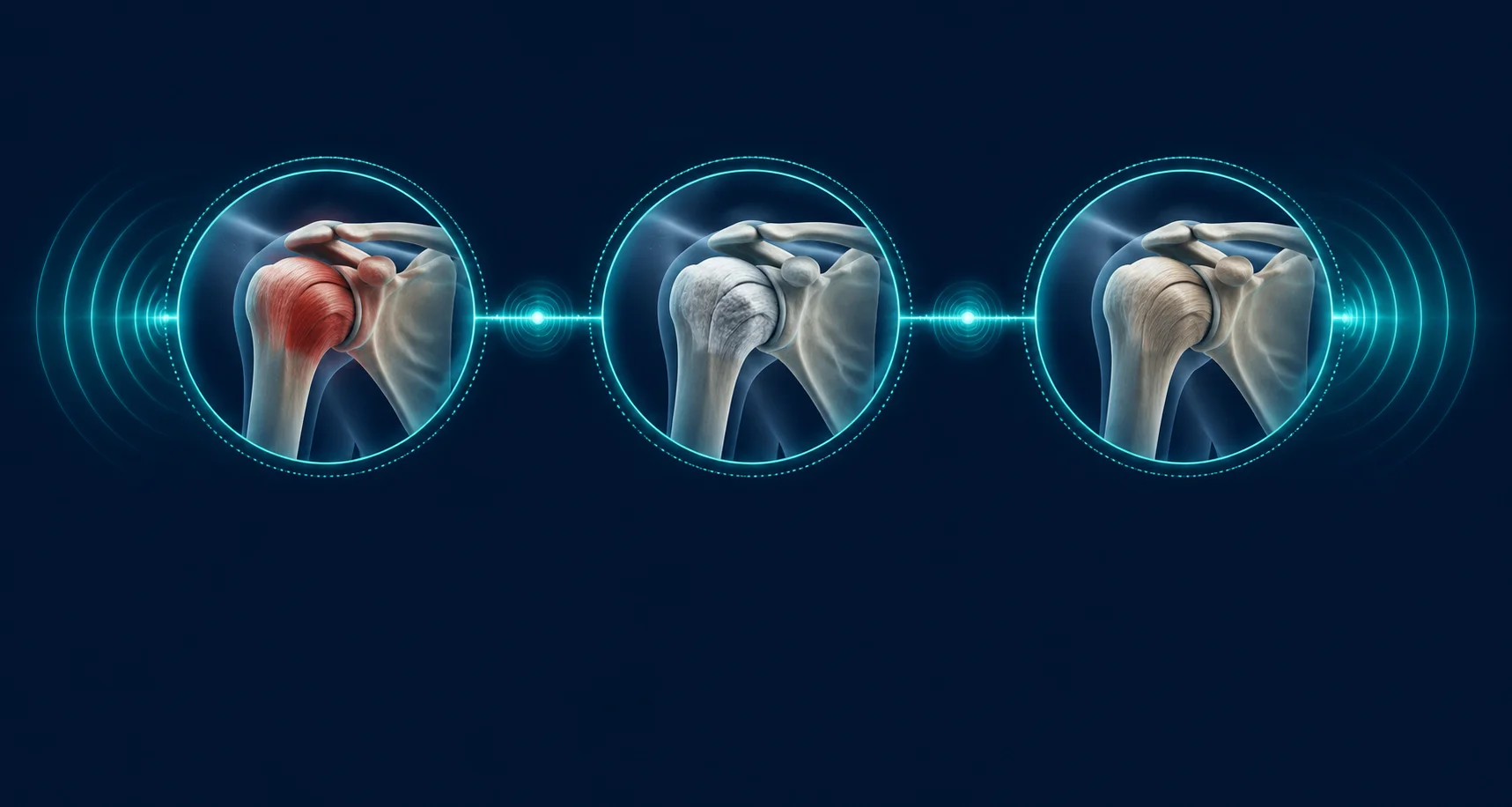
Musculoskeletal • May 2026
Frozen Shoulder — and How Focal Shockwave Can Set You Free
Adhesive capsulitis causing unbearable pain and stiffness? Focal shockwave therapy offers drug-free relief without surgery.
Read article →Musculoskeletal • April 2026
Shockwave Therapy for Plantar Fasciitis: What to Expect
How focused shockwave therapy breaks the cycle of chronic heel pain — evidence, session count, and what the research shows.
Read article →Stop Managing the Pain — Start Repairing the Tissue
If you have been living with chronic musculoskeletal pain — shoulder, elbow, heel, hip or back — that has not responded to rest, injections or physiotherapy, focal shockwave therapy at Shockwave Revibe Clinic could deliver the biological repair stimulus your tissue needs. Every treatment is delivered personally by Dr Kishore Bahl at our Notting Hill Gate clinic. Appointments available at 22 Notting Hill Gate, London W11.
Book TodayBy booking an appointment you agree to our Privacy Policy
Find Us on Google
Share your experience — your review helps others find our clinic.